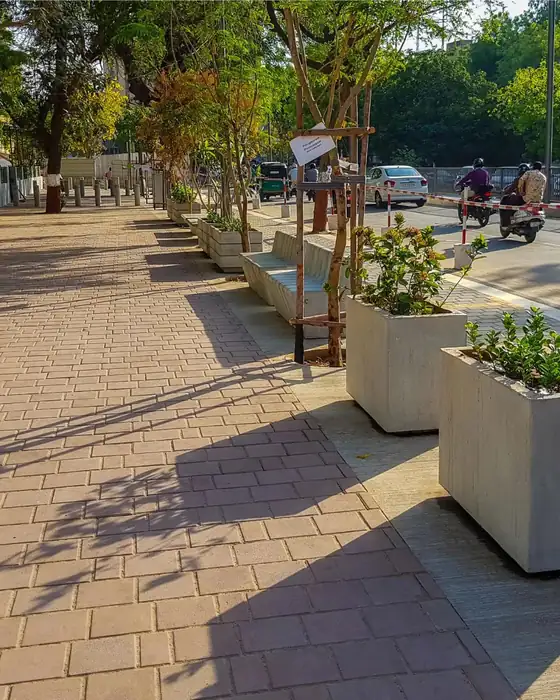
 CG Road, Ahmedabad
A footpath should be a continuous route.
Clear walking zones, steady edges and planting make walking safe and dignified.

Cities and villages should not merely move vehicles. They should help people live better.
Kalyaan explores how Indian cities and villages, their streets, markets, public spaces and infrastructure, can become safer, healthier, greener and easier to use, and how they can be maintained well over the years.
The focus is people: safety, health, dignity and long-term sustainability.
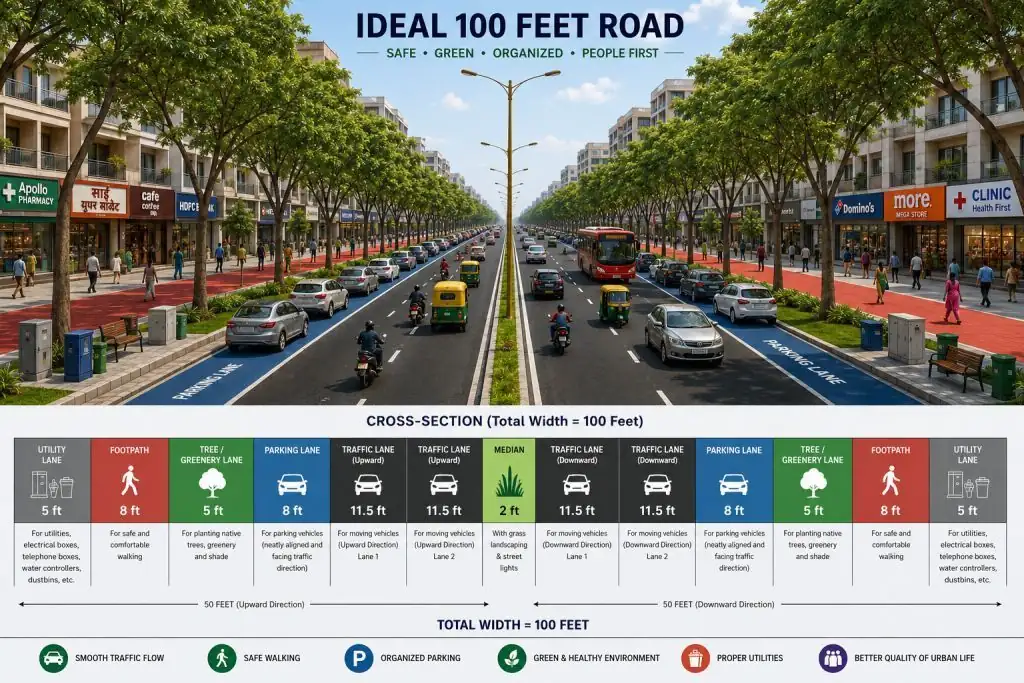
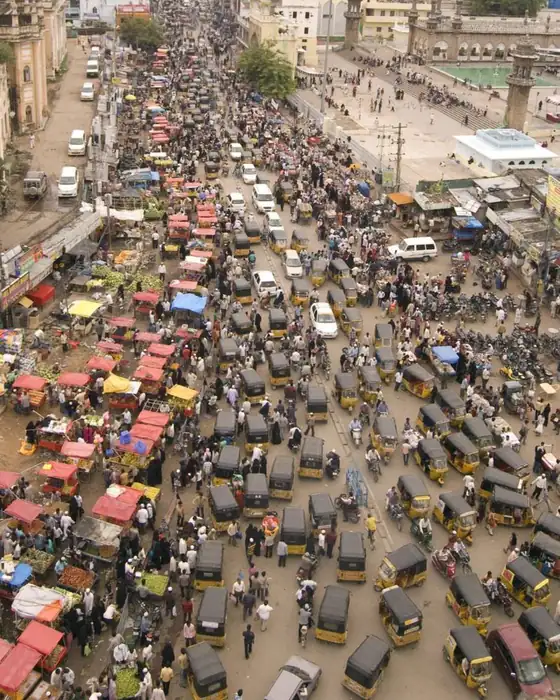
Many streets are asked to carry pedestrians, vehicles, parking, vendors, utilities, trees and shops without giving clear space to any of them. The result is conflict, congestion, unsafe walking and poor public space.
Urban reform does not always need wider roads. Often it starts by organising the space we already have, so walking, parking, trees, utilities and traffic can work side by side.
A street is not only a traffic corridor. It is shared public infrastructure.
Kalyaan identifies recurring urban conflicts, studies how space is used today, shows alternatives visually and invites discussion.
See where movement, parking, utilities and public activity conflict.
Give each essential street function its own defined place.
Use design studies so alternatives are easy to understand and discuss.
Invite citizens, professionals and institutions to improve the ideas.
Small, disciplined decisions about walking space, trees, utilities, parking and access can change how a street works every day. Images are design studies or examples, not Kalyaan projects.
CG Road, AhmedabadClear walking zones, steady edges and planting make walking safe and dignified.
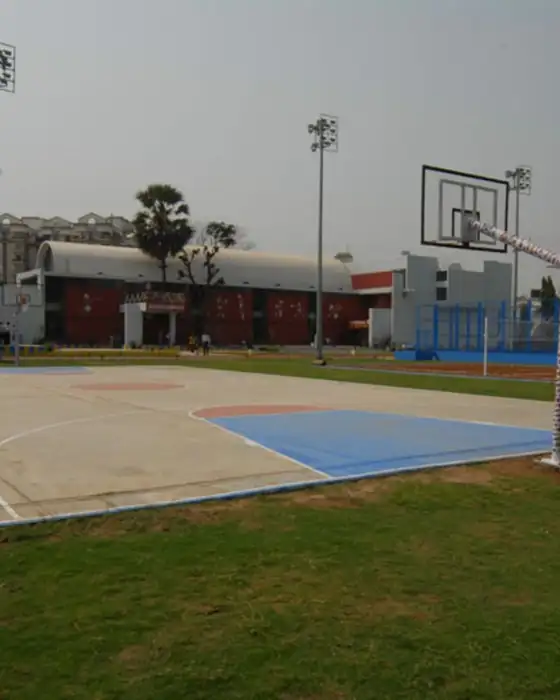 Public recreation
Sports grounds, walking tracks and open gyms serve whole neighbourhoods.
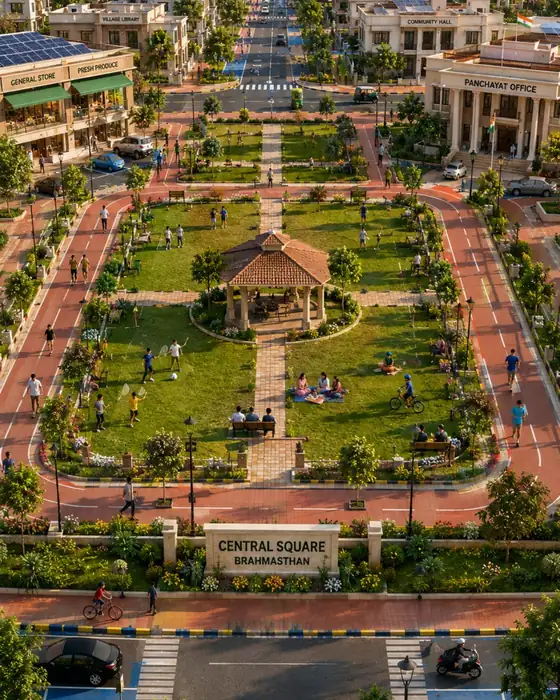 Planned neighbourhoods
Clear road hierarchies, public spaces and services, instead of fixing disorder later.

Continuous walking space, free of poles, parking and obstructions.

Defined bays stop parked vehicles from taking walking and traffic space.

Planned tree strips give shade without blocking pedestrians.

Clear lanes and predictable movement reduce conflict and noise.
 Development
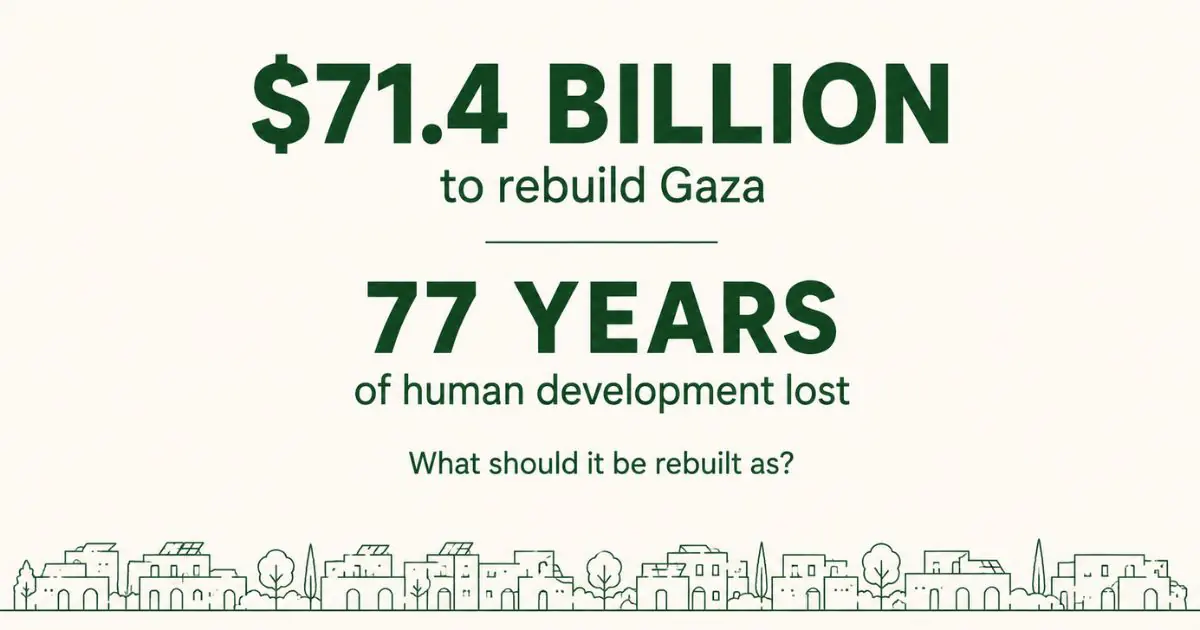
Gaza’s rebuilding will cost $71.4 billion (UN). A livelihood-first plan: rubble blocks, digital work, courtyard towns, homes that stay cool without power.
 विकास · हिंदी
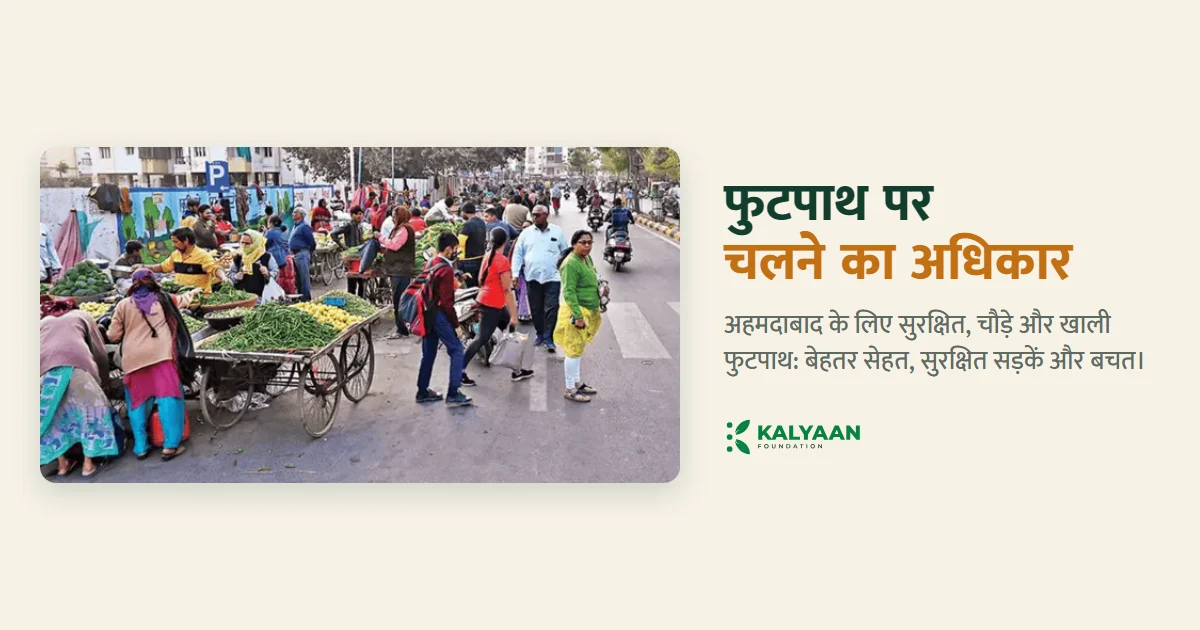
अहमदाबाद के फुटपाथों पर ठेले, खंभे और खड़े वाहन रास्ता रोकते हैं। जानें ‘फुटपाथ पर चलने का अधिकार’ क्यों ज़रूरी है, इसके समाधान और पैदल चलने के लाभ।
 Development
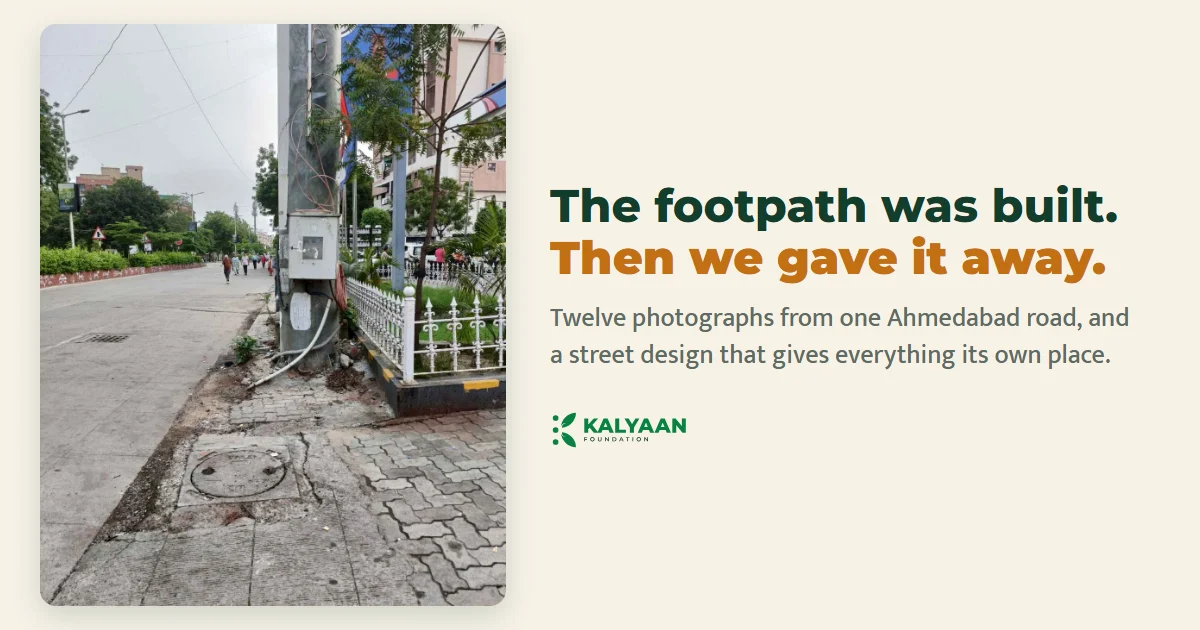
Twelve photographs from one Ahmedabad road show who really encroaches the footpath, and a street design that gives everything its own place.
Share a local example, contribute your expertise, or explore more of Kalyaan's thinking on streets, footpaths and public space.