
 Governance

Wars begin in human minds, when tension between groups builds up until diplomacy fails. Invincible Defence Technology (IDT) proposes a non-violent answer: large groups practising Transcendental Meditation to reduce this collective stress. This post explains how IDT is said to work, what its studies report, and how a military could use it.
A peaceful technology for defence
A new approach called Invincible Defence Technology (IDT) aims to prevent war and establish peace by working at the deepest level of nature’s functioning, according to its developers. It offers a non-lethal way to address the root causes of conflict, focusing on defusing tensions in society before they turn into violence.
The root cause of war and how to address it
Experts agree that war is fundamentally a human problem, which needs a human-centred solution. At its core, war is often triggered by accumulated “social stress”: the build-up of political, religious or ethnic tension between opposing groups. As social stress rises, it divides societies, makes diplomacy difficult and leads to conflicts that can escalate into full-scale war.
Invincible Defence Technology offers an alternative: reducing stress in society itself. Lowering collective stress within communities, its supporters say, prevents tensions, divisions and hostile intent from forming, and so lowers the chance of conflict.
How Invincible Defence Technology works
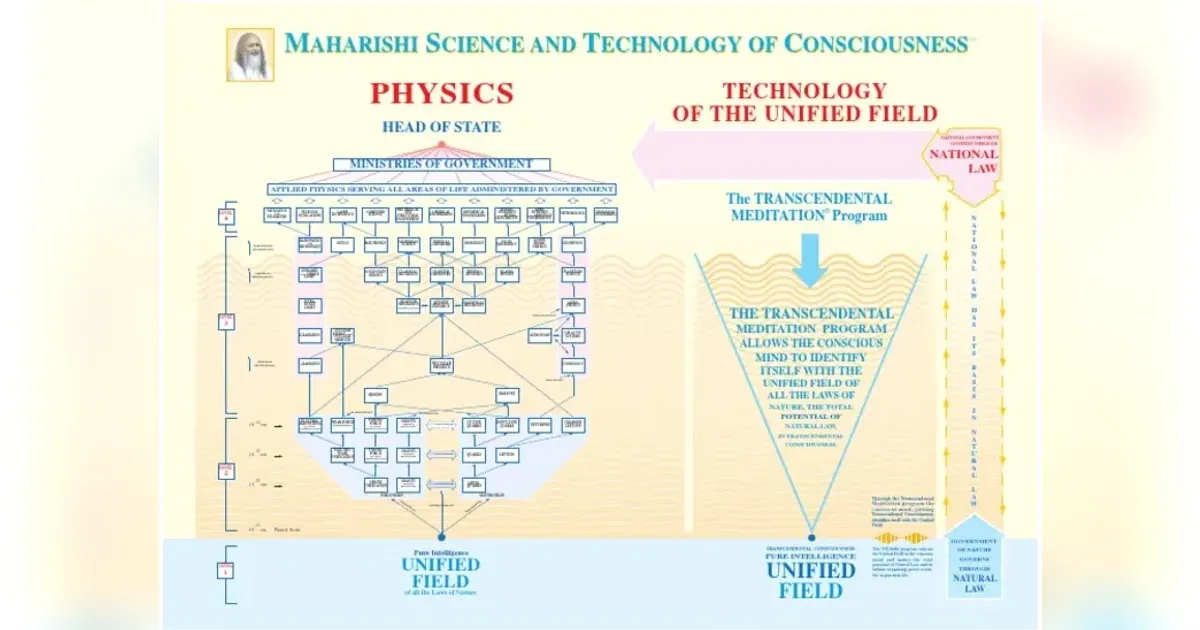
Today, militaries can try to break the cycle of conflict by using IDT. The technology is grounded in the unified field theory of all natural laws, described as the most fundamental level of nature. Through technologies of consciousness, IDT is said to create a ripple effect of harmony and coherence throughout society, reducing violence, terrorism and war.
Maharishi Mahesh Yogi’s role
The late Maharishi Mahesh Yogi revived ancient techniques such as Transcendental Meditation (TM) and its advanced practices, to reach and enliven this unified field. When used for defence, these meditation practices are called Invincible Defence Technology. IDT is non-lethal and non-destructive, and people of all faiths can practise it to reduce conflict and social stress.

The Maharishi Effect: what the studies report
According to its supporters, IDT works when practised by groups that reach a certain size: about the square root of 1 percent of a population. This is called the Maharishi Effect. Researchers in the TM movement report more than 50 studies in which, once this number was reached, crime fell, quality of life improved and conflict decreased.
Case study: Israel and Lebanon, 1983
In 1983, a two-month experiment tested the Maharishi Effect: a group practising these techniques in Jerusalem was studied alongside the war in Lebanon. The results, published in 1988 in the Journal of Conflict Resolution by David Orme-Johnson and colleagues, linked the group’s size with less conflict. IDT’s supporters summarise the reported results as:
- 76% fewer war deaths
- 68% fewer war injuries
- 48% less conflict
- 66% more cooperation between opposing groups
The researchers reported that the chance of such results happening by accident was extremely small. Other scientists have questioned these methods, so the findings remain debated, but they make a strong case for further, independent testing.
How militaries can use Invincible Defence Technology
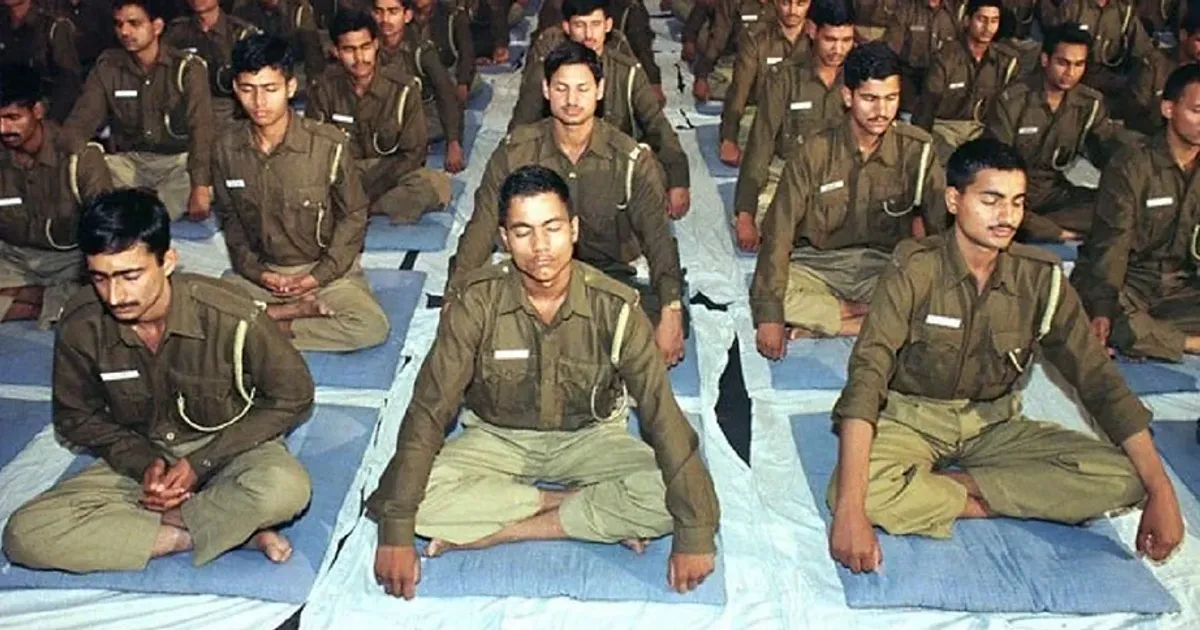
The first duty of any military is to protect its citizens. With IDT, a military could do this by setting up a Prevention Wing: a group trained in IDT that creates a shield of coherence and harmony. The Prevention Wing is small, needing only about the square root of 1 percent of a nation’s population.
For example, IDT’s supporters estimate that protecting the Middle East would need about 1,717 soldiers trained in IDT. A military that does this would not only strengthen national security but could also foster peace within and beyond its borders.
Why militaries should consider IDT
In an age of unpredictable conflict and rising global tension, IDT offers a non-violent approach to peace that costs little and harms no one. Military leaders have good reason to test it, by training soldiers, or any large group in society, in these techniques. The same spirit of cooperation beyond borders runs through our posts on a world without borders and on what Gaza should be rebuilt as.
The time to try Invincible Defence Technology is now
Many articles and studies have documented IDT, and it has gained attention around the world. By testing it, militaries have a unique opportunity to build lasting security and peace. Now is the time to act, set up Prevention Wings and protect future generations.
Sources
- Maj. Gen. (Retd.) Kulwant Singh and Dr David Leffler, Invincible Defence Technology, invinciblemilitary.org, accessed 9 November 2026.
- D. W. Orme-Johnson, C. N. Alexander, J. L. Davies, H. M. Chandler and W. E. Larimore, “International Peace Project in the Middle East”, Journal of Conflict Resolution 32(4), 776–812 (1988), doi.org/10.1177/0022002788032004009.
Questions and answers
What is Invincible Defence Technology?
IDT is the use of Transcendental Meditation and its advanced techniques by large groups, especially in the military, with the aim of reducing collective social stress and so preventing violence, terrorism and war.
What is the Maharishi Effect?
It is the claim that when about the square root of 1% of a population practises these techniques together, crime, violence and conflict in that population decrease. Supporters cite more than 50 studies.
What happened in the Israel–Lebanon study?
During a two-month experiment in 1983, a meditating group in Jerusalem was linked by its researchers to fewer war deaths and less conflict in Lebanon. The study was published in the Journal of Conflict Resolution in 1988.
How many people would be needed?
According to IDT's supporters, about the square root of 1% of the population. For the Middle East they estimate around 1,700 trained people.